Object of the Month: May 2026
Share
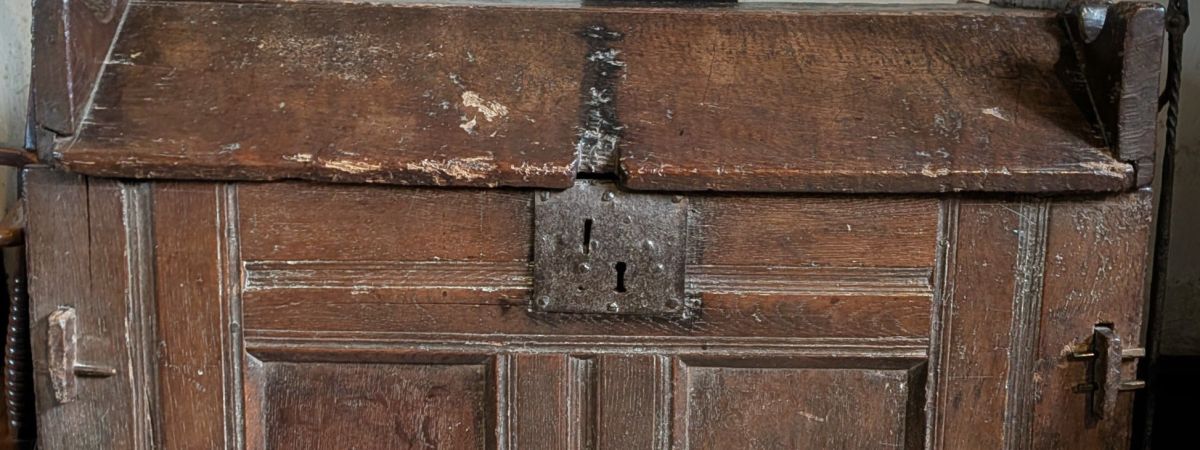
Upon entering the kitchen of Selly Manor, you may notice a large oak box crouched against the plaster of the back wall, rather inconspicuously. Step closer, and you will notice that this wooden item, with its weary woodworm wear, is a grain ark.
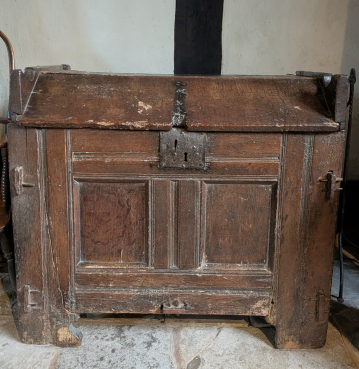
Image Above: Our late 17th Century Grain Ark located in our Kitchen nestled between larger cupboards.
Grain arks (also known by other terms such as meal arks or chests, hutches, or binnes, and more regional terms such as ‘corn kista’ and ‘cistiau styffylog’), were used to store grain, flour, or bread in a dry and safe container, which is something you may have been able to guess! They were used from the medieval period up into the 18th century, particularly in Wales.
The design of the chest itself is intended to be quite simple – this is a piece with utility and function in mind, so they have a more nondescript appearance. The arks sit on raised legs, in order to prevent the interference of rodents or other pests. Surprisingly for its size, it could be disassembled easily for cleaning, as it was designed to be held together by small wooden dowels. Another handy feature, and one that is arguably typical of many household staples, is multifunctionality. The lid can be removed and upturned to use as a trough for kneading or held up on poles as a sort of wheelbarrow for transporting the contents of the ark. As less fortunate households did not always have bread ovens, so it was commonplace for proven dough to made at home and carried into town to a communal oven for a fee.
We have two grain arks in our collection, the one that was alluded to at the beginning of this blog is a late 17th century piece that was sold to Laurence Cadbury by Oliver Baker from his antique shop in Stratford in 1924 for £30 (roughly £1600 today), along with a similar ark which cost £12.10.00 (just under £650). This second chest is on long-term loan to Blakesley Hall in Yardley.
Bread has always been a staple of the average diet, and having a large box especially to keep the grain in one’s household would have been vital. The flexibility of its function further assists in allowing a more streamlined process, during a time where every hour had to be occupied wisely in order to maintain the operations of daily living.
Written by Tristram Flood, Volunteer
Edited by Megan Ward, Museum Assistant