A World Away: L. J Cadbury's Letters from Wartime Moscow
Share
In the Summer of 1941, Laurence John Cadbury rather suddenly found himself in a city very far from home - both geographically, and culturally. Naturally, Laurence was no stranger to travelling; as a celebrated businessman of a chocolate manufacturer with vast global reach and industry, he was required to make numerous trips every year to countries all over the world. This is particularly apparent when looking through the stamps and visas within many of his old passports, which are kept in the Roger Cadbury Library.
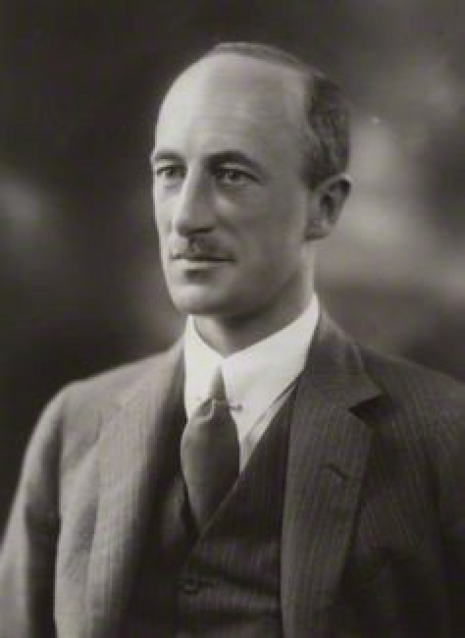
Image above: Laurence John Cadbury (1889–1982)
Laurence was the eldest child of George and Elizabeth Cadbury. He grew up in a large family of ten siblings with five from George’s first marriage to Mary, and five from his marriage to Elizabeth. He was educated at Trinity College, Cambridge, where he was among the first students to read Economics in 1908. It was here that he also began collecting antiques, a lifelong interest that would later help shape the collections at Selly Manor Museum.
His talent for economics and business was widely recognised. In 1919 Laurence was appointed to the Board of Directors at Cadbury's as a Managing Director, and following the death of his father George Cadbury in 1922 held an increasingly influential role in the business. In addition, in 1936, Laurence was appointed a Director of the Bank of England and would hold this appointment until 1961. His expertise in economic matters that made him a trusted figure at the highest levels of national and international finance.
However, the circumstances that placed him within Moscow, June 1941, days after the German invasion of the U.S.S.R. (commonly known by the code name ‘Operation Barbarossa’), are certainly unique. On the afternoon of the invasion, Cadbury received a telegram from the private secretary of Hugh Dalton, the Minister of Economic Warfare, and Sir Michael Moissey Postan, an economic historian who headed the Russian section of the government during the Second World War. They requested his presence in London, and so he left as soon as possible the next morning.
Laurence was subsequently requested to act as the Head of the Economic Section of the Mission to the Soviet Union, a member of His Majesty’s Diplomatic Service in the rank of Counsellor. After a couple of conversations on what the role would entail, he accepted the position and immediately began preparations for departure. He would not know how long he would be away for, nor the exact sort of business that would be required of him. As it turns out, he would not return to his home in Northfield until the very end of September. The primary reasoning of the delegation was due to a shortage of supplies in the Soviet Union following the sudden collapse of their non-aggression pact with Germany, and the subsequent pressure to strengthen Anglo-Soviet ties. Winston Churchill relayed in his speech broadcast on the 22nd June “We have offered to the Government of Soviet Russia any technical or economic assistance which is in our power, and which is likely to be of service to them.” It was Cadbury’s elite status in business that attained him a position within part of this service.
L. J. Cadbury recorded a large portion of his time in the Soviet Union, mainly Moscow, and compiled these pieces within a privately circulated booklet titled ‘Letters from Moscow’. Something that struck me while reading this brochure of sorts, is how enthralling and descriptive his recollections are. There is often also a humorous element to what he writes - he even manages to convey a somewhat romantic view of having “sleuths to dog my footsteps”. An interesting quirk to note, is that he frequently refers to them as ‘Opgu sleuths’. The OPGU, a manifestation of the Soviet secret police, had in fact been dissolved seven years prior. It was now the NKVD. This cultural faux-pas contributes to a certain motif of blissful reminiscence through his writing, as he had visited Moscow almost exactly two decades before. It seems that most of his impressions from a pre-Stalinist era still held great influence over him during the early 1940s. This does not prevent Laurence from littering his texts with short but fair social observations. He appears to mostly have a rather balanced view of Soviet life, commenting on the appearances of poverty in the general populations, but also stating that “It would do good to some of our Left-Wing enthusiasts at Bournville, who have proved so unaccommodating over women taking on men’s jobs for the war, to come out here.”
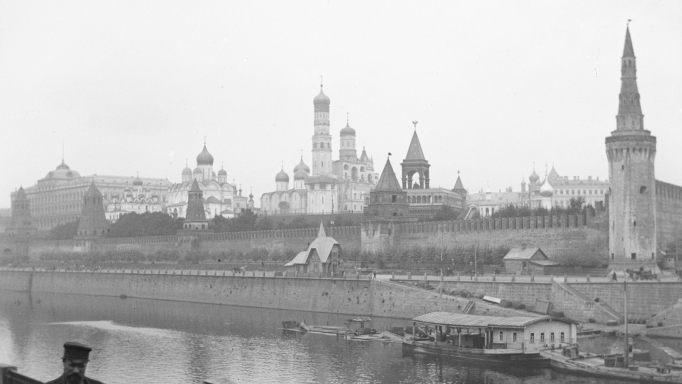
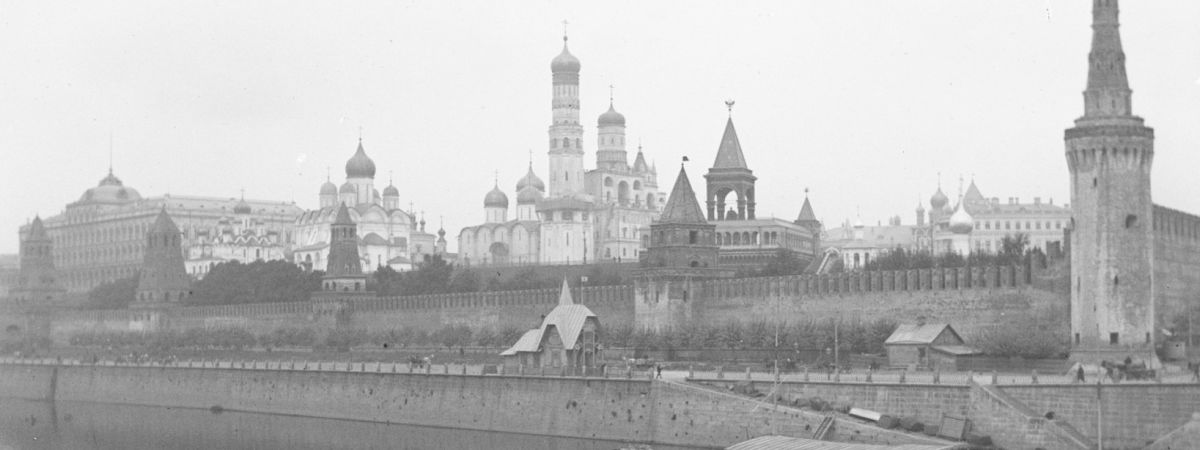
Image above: The Moscow Kremlin in the early 1900s, offering a glimpse of the city that Laurence Cadbury would later experience in wartime.
In total, Cadbury reports there being over 50 members of British personnel on the mission, headed by Sir Stafford Cripps and including the embassy staff and three resident attachés. The delegation was initially received by Vyacheslav Molotov, who had been Premier of the Soviet Union until the previous month, on behalf of the Soviet Government. Cadbury described that Molotov looked “very depressed and dejected” and that his reply “had got no fight in it”. They were also received by Anastas Mikoyan, who at the time was the Commissar of Foreign Trade and had been appointed to work with the commercial delegation.
Many meetings were naturally held with Joseph Stalin himself, several of which Cadbury relates. The latter has a habit of referring to Stalin almost exclusively as ‘Uncle Joe’, a nickname afforded to him by certain Western circles while camaraderie with the Soviet Union was considered imperative. Laurence provides a rather interesting description of the leader, “[Stalin] appears quite a benevolent old gentleman, his hair very slightly grey, a shrewd twinkle in his eyes, and a quiet, rather aloof unassuming manner.” He goes on to say that he was “looking on with a benign and thoughtful smile, clasping and unclasping his strong, short, peasant hands, which do not seem to be either dripping with or stained with the blood of his liquidated rivals.” These details are from the signing of the Anglo-Soviet pact on the 13th July, of which there is video footage from British Pathé where Laurence Cadbury is clearly visible (see below). He stands out from the first second of footage due to his light coloured suit, a curiosity that he himself writes about. He expresses a judgement on the cameramen, who had turned up in old cricket shirts, and were “generally dirty”. Meanwhile, Laurence proudly states that he had on a tropical outfit, which had “been a godsend and universally envied.”
Despite the tense environment, he also seemed to have quite a large amount of leisure time between his meetings and the bombardments. He enjoyed going for strolls and drives (the latter of which once ended terribly, with his Russian chauffeur knocking down a pedestrian at a crossing and reportedly breaking his legs), as well as rowing along the Moskva River from the Park of Rest and Culture on skiffs hired for 2 roubles and 50 kopecks. He completed much reading while suffering from a short bout of the flu, borrowing books from the embassy library such as ‘A Year in Russia’ by Maurice Baring, ‘Battle of Tsushima’ by Vladimir Semenov, ‘Victorious Troy’ by John Masefield, ‘The Thinking Reed’ by Rebecca West, and finally, skim reads of Walter Citrine’s ‘I Search for Truth in Russia’, and W.P. Coate’s ‘Armed Intervention in Russia, 1918-1922’, both of which he apparently found rather dull.
Cadbury’s letters seem to peter out rather abruptly. His return home required a fair amount of transport transfers. First, he had to fly from Moscow to Arkhangelsk (he refers to the city by its less popular English transliteration, Archangel) in a Douglas C-47 aircraft. He then slept on board a British ship, the Llanstephen Castle, which was docked in Arkhangelsk with a convoy and due to return to England the next day. The return flight itself was completed in a PBY Catalina, an amphibious military aircraft. The flight was uncomfortable, with no seating and Laurence having to occupy a pilot’s seat for the majority of the journey. There were two pilots, and when one was not on duty, they would lie on the floor in the gangway. It was also extremely cold - the temperature unforgivingly plummeting to -20 degrees at times. Seemingly, he was very interested in the operations of the flight, providing possibly more detail in this segment than the rest of his entire trip.
Once back on dry British land, the work naturally didn’t stop. Laurence continued to make his rounds to various ministries and figures, including Lord Beaverbrook, who was now the Minister of Supply. He himself would then head a delegation to Moscow in the next couple of days, in the wake of the aforementioned rising conflict with Germany in the Soviet Union.
Not much of Laurence’s actual work is mentioned through this publication, beyond the signing of the Anglo-Soviet agreement. It could be supposed that despite it being for private circulation, it would be deemed inappropriate to divulge too much information. There are also some extracts that had been removed from the booklet, as not to stray into ‘disrespectful attitudes’ which could possibly harm relations within the two governments. It would be interesting to see whether there are more unfiltered accounts of his mission elsewhere, and what he got up to in the long periods of unrecorded time between entries. For now, we must be thankful that Cadbury left such an interesting set of stories about a wonderfully unique adventure.
Written by Tristram Flood, Volunteer
Edited by Megan Ward, Museum Assistant. Thank you, Tris, for your care and thoughtful engagement with our archives.