Icons & Instigators: women's history
Share
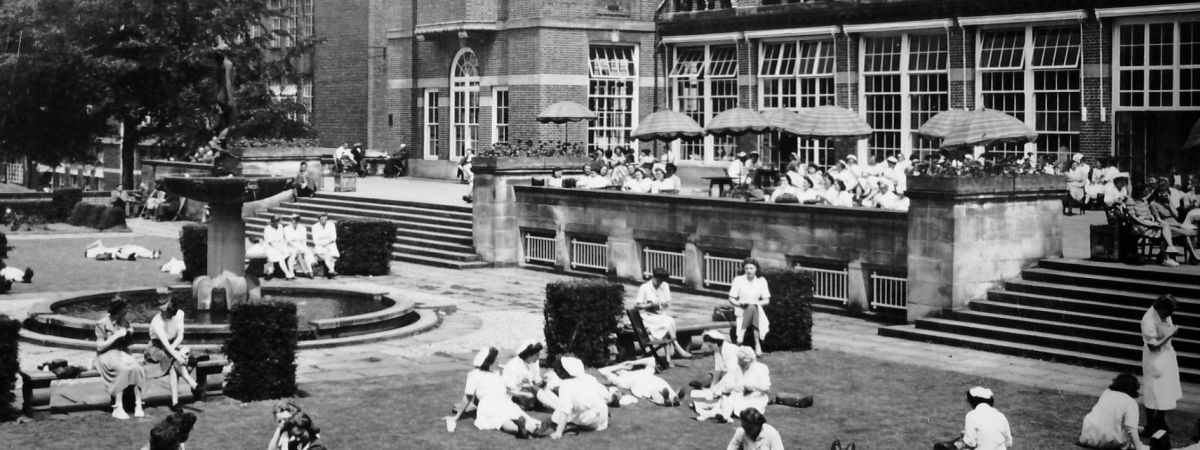
This Women’s History Month, discover the stories of the women who helped shape Bournville, Birmingham, and beyond. Icons & Instigators brings together five years of women's history research to spotlight ten inspiring women and groups from the 20th century.
The exhibition was displayed at the Rest House on Bournville Village Green on 14th & 15th March, and popped up in community spaces across the Bournville Village Trust and nearby neighbourhoods at:
Northfield Library, Rowheath Pavilion, Stirchley Baths, Hub on the Green, Shenley Court Hall, 350 Bournville Lane
The banners were reunited at Shenley Heritage Day at Shenley Court Hall on Tuesday 7th April.
If you didn't catch the exhibition in person, all the information is below.
Mary Cadbury (née Tylor)
1849 - 1887
Mary Cadbury was born into a Quaker family in London in 1849 and spent most of her childhood in Switzerland. Mary moved to Birmingham to take up a job as a governess, where soon after she was introduced to George Cadbury. The couple married in 1872 and over the next 15 years had 5 children. During their marriage, Cadbury Brothers transformed from a struggling company into a successful, innovative one. Mary supported George through major changes and defining moments, including in 1879 when the Cadbury business relocated from Bridge Street to Bournville.
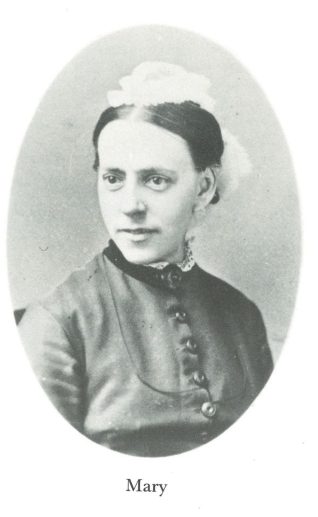
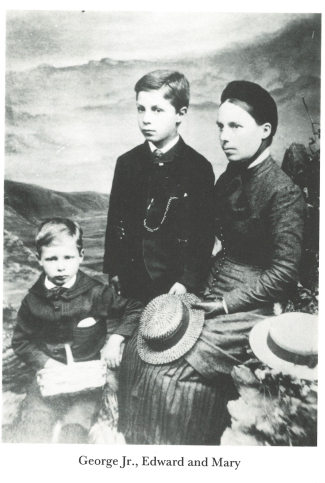
Mary was passionate about the Bournville community and contributed to it through charitable works. She regularly held garden parties at Woodbrook, the Cadbury’s home, for children, mothers and adult education groups. Mary saw the value in education and organised women to form a regular group at the cooperative hall. It was there on Mondays that Mary taught women to read, write, and study the Bible.
Mary died suddenly in 1887, but her mission at the Cooperative Hall continued to flourish. By 1908, the group she started had 263 members. Mary set many precedents which George’s second wife Elizabeth later followed.
Mary Sargant Florence
1857 - 1954
Mary Sargent Florence was a British artist best known for her fresco paintings, a technique where artists paint directly onto wet plaster. Mary studied at the Slade School of Art and her works can be seen at Bournville Village Primary School, where she painted murals of New Testament Bible stories between 1912 and 1914.
Initially brought in to advise fellow artist Mary Creighton, she ended up painting over half of the murals herself. Each fresco includes a hidden detail from Bournville village. She had a very successful artistic career and some of her work is now part of the Tate collection.
Outside her artistic career, Mary was a dedicated suffragist, campaigning for women’s right to vote. She designed the badge for the Women’s Tax Resistance League, with the powerful slogan, “No vote, no tax”. Mary put this into practice, refusing to pay her taxes until women were granted the right to vote.
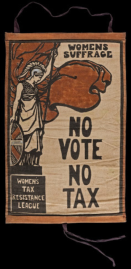
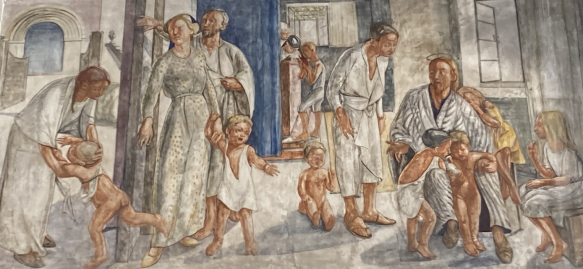
Left: No Vote No Tax banner designed by Mary Sargant Florence. Right: Fresco painted by Mary Sargant Florence in Bournville Junior School, 'Suffer Little Children' 1912-14, featuring Bournville Friends Quaker Meeting House.
Dame Elizabeth Cadbury (née Taylor)
1858 - 1951
Elizabeth Cadbury was the chair of Bournville Village Trust from 1922 until her death in 1951. In partnership with her husband, George Cadbury, she co-founded the Bournville Village Trust in 1900. Elizabeth guided the Trust through challenging post-war years, a time when housing and welfare issues were at crisis point.
Driven by her strong Quaker beliefs, Elizabeth dedicated her life to philanthropy, focusing on social justice and improving the welfare of those in poverty, particularly women and children, through education and social reform.
Elizabeth served as a governor of the University of Birmingham and president of several educational organisations. In 1919, she received an honorary MA from the University of Birmingham for her services to education and school welfare, and in 1934 Elizabeth was made a Dame in recognition of her outstanding contributions to welfare and education.
Elizabeth’s work helped shape Bournville not just as a model village, but as a thriving community where every person, especially every child, had the opportunity to live a healthy, happy, and dignified life. But her philanthropy had ramifications outside of the village and her social impact was felt both nationally and internationally.
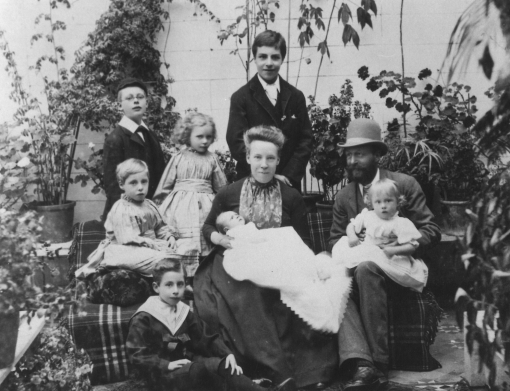
Elizabeth Cadbury (centre) surrounded by her husband George and family.
Julia Varley
1871 - 1952
Julia Varley was a pioneering trade unionist, suffragette, and political activist. Julia began her union work as a teenager, becoming secretary of the Bradford Branch of the Weavers and Textile Workers Union aged just 15. In an era when it was considered unacceptable for women to be involved in trade unions, let alone hold leadership positions, she faced significant opposition. Despite this, she continued advocating for women workers while also balancing long hours in the mill and caring for her younger siblings after her mother’s death in 1896.
In 1909, Edward Cadbury invited Julia to Bournville, where she worked to encourage more women at the Cadbury factory to join trade unions. Here, she established the Birmingham branch of the National Federation of Women Workers. Then in 1910, Julia played a prominent role in organising funds for the women chainmakers strike in Cradley Heath. The strike fund allowed the women to strike for 10 weeks until their employers agreed to better pay.
Julia was also a militant suffragette and a member of the Women’s Social and Political Union. She served two short prison sentences at Royal Holloway Prison for refusing to pay a fine after attempting to enter the House of Commons. A Blue Plaque at 42 Hay Green Lane commemorates Julia Varley and her lasting impact on women workers.
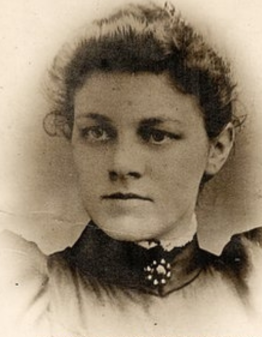
Florence Barrow
1876 - 1964
Born into a conventional middle-class family, Florence was George Cadbury’s first cousin once removed. As a teenager Florence began teaching at a women’s adult school. This began her lifelong commitment to education, health, and welfare for women and children.
During the First World War she embarked on humanitarian relief work with the Friends’ War Victims’ Relief Committee and established orphanages for refugee children and after the war, Florence was one of the first civilians allowed into Germany on behalf of the Quaker Relief Services.
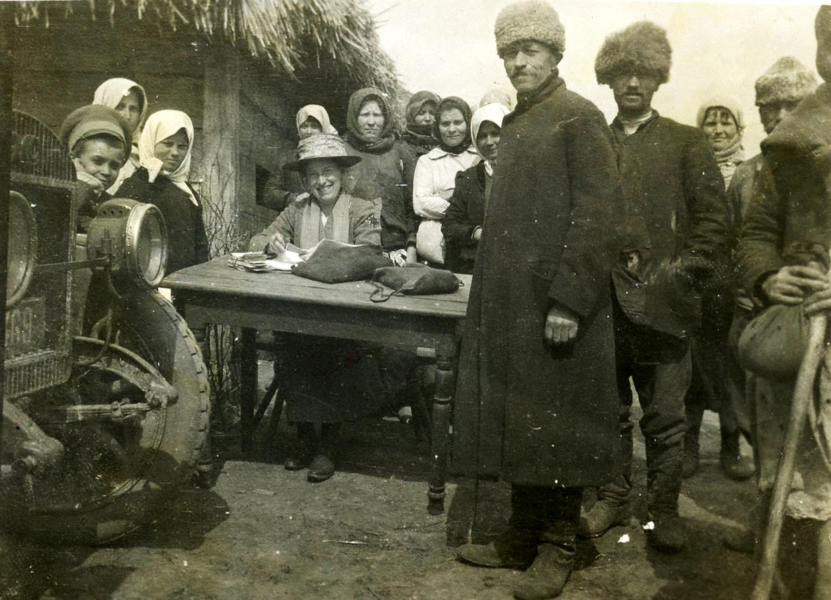
Florence believed society had a responsibility to provide decent and affordable homes for all. She spent four years in Poland where she led a team of British and American relief workers, who were involved in the provision of housing in a country decimated by war. Continuing this cause when she returned to Birmingham, she was a member of the newly formed Housing Improvement Society, COPEC. Florence sold her house to buy the first COPEC properties, 19 back-to-back houses which were then renovated and rented out at a fair price.
In the 1930s Florence assisted Austrian and German refugees, many of them Jewish, by finding support for them when they arrived in Birmingham.
Beatrice Cadbury
1884 - 1976
Beatrice Cadbury, daughter of Richard Cadbury, became a shareholder in the Cadbury firm aged 21. By 1916, she began questioning her privileged life, writing to her husband, “It seems almost wicked... we have everything and more than we need, while our friends are literally starving”. She felt uncomfortable receiving income from inherited shares, believing capitalism fuelled inequality. Beatrice wanted to give away her shares to Bournville workers to apologise for benefiting from their hard work. The Bournville Works Council initially rejected her offer, but after two years of persistence, in 1922, they accepted her shares and the Boeke Trust was established to partially fund her work.
Beatrice and her husband, Kees Boeke, were pacifists and faced challenges for their beliefs. Kees was imprisoned for protesting conscription during WWI and was deported to the Netherlands in 1918. There, they refused to pay taxes, leading to their children being excluded from state schools. In 1926, they opened their own school, Werkplaats Kindergemeenschap (Workshop Children’s Community) where Beatrice taught English.
In 1942, Beatrice and Kees began hiding Jewish-German children who were fleeing Nazi persecution, providing false identities and papers to protect them. Members of the school, including Kees Boeke, were arrested and questioned, and two employees were murdered. Despite this, no-one gave away the children’s locations.
Bertha Bracey
1893 - 1989
Bertha Bracey was born in Bournville. At the age of 18, she became a Quaker, a faith that inspired her lifelong commitment to helping others. Bertha began her aid work in Vienna, supporting youth clubs during a time of extreme hardship. After the First World War, much of Europe faced poverty, hyperinflation and political instability. Bertha joined other Quakers in providing food aid to communities in Germany and Austria, helping to build trust and understanding.
After Kristallnacht in 1938, Bertha was among a group of Quakers who met with the Home Secretary to urge Britain to accept Jewish children fleeing Nazi persecution. That same day, Parliament agreed to admit 10,000 children through the Kindertransport scheme.
Bertha later travelled to Germany, personally delivering papers to Jewish families, disguising herself as a headmistress to avoid suspicion. Her relief work continued during and after the Second World War.
In 2010, Bertha Bracey was posthumously recognised as a British Hero of the Holocaust.
The Cadbury Angels
During the First World War, women across Britain stepped into factory roles as men left to serve in the armed forces. At the Cadbury factory in Bournville, around 4 000 women took on these vital jobs, working on production lines in white uniforms. They became affectionately nicknamed the Cadbury Angels by the press.
But their contribution went far beyond factory work. In their own time, the Cadbury Angels prepared and sent nearly 30 000 care parcels to soldiers at the front. These parcels included hand-knitted socks, vests, and (of course) chocolate, offering comfort, encouragement, and a reminder of home.
The women also set up a reading library, allowing soldiers to request books. Around 40 000 books were sent during the war.
The Cadbury Angels supported injured soldiers arriving by train, helped them reach hospitals or convalescent homes, and organised musical events to raise funds for the war effort.
Although supported by Cadbury’s directors, these activities were led entirely by the women themselves, showing their determination to support the war effort beyond their daily work.
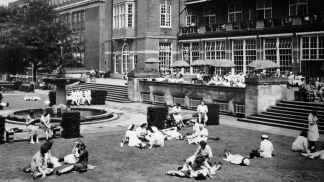
Female Cadbury workers outside the dining block.
Dr Susan Ofori-Atta
1917 - 1985
Susan was the first female medical doctor in Ghana. And the first Ghanaian woman to earn a university degree.
A member of the prominent Ofori-Atta royal dynasty, Susan Ofori-Atta was born in Kyebi, Gold Coast (modern-day Ghana). Susan’s father was Nana Sir Ofori Atta I, Paramount Chief of Akim Abuakwa - one of the most important cocoa-producing districts for Cadburys. African Ministers and Chiefs, such as Susan’s father, visited Bournville frequently as a form of relationship-building, which contributed to business expansion. In 1949 Susan (second from right) and her sister, Akuffo Addo (second from left) visited Bournville after his death.
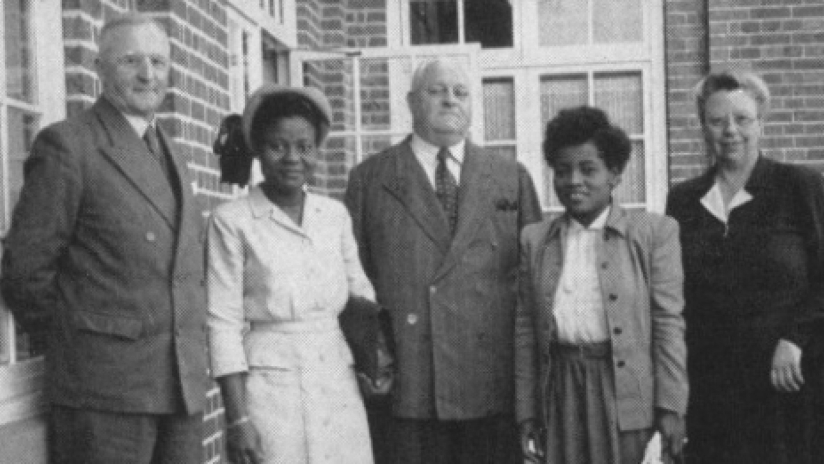
On the visit Susan experienced industrial life and factory conditions first hand, including the arrival of West African cocoa at the factory. She was warmly welcomed by several of the Cadbury family, including Laurence Cadbury, Dorothy Cadbury, and Mr and Mrs William A Cadbury. Susan was already familiar with the UK, having chosen to continue her education at Edinburgh University Medical School, where she obtained her MBChB degree.
Susan co-founded the paediatrics department at the University of Ghana Medical School, before starting her own practice which offered free medical services for women and children. The University of Ghana awarded her an Honorary Doctor of Science in recognition of her groundbreaking work on malnutrition in children.
Thorn Road
No. 10 Thorn Road in Bournville ‘was experimentally equipped by [Bournville Works] … for the teaching of Housewifery.’
Known as ‘the cottage’, it was used to facilitate the teaching of housewifery and lessons on childcare which included a real baby who was taken back to his mother later in the day. The house was later managed by Kings Norton and Northfield Higher Education Committee and in use until the early 1960s.
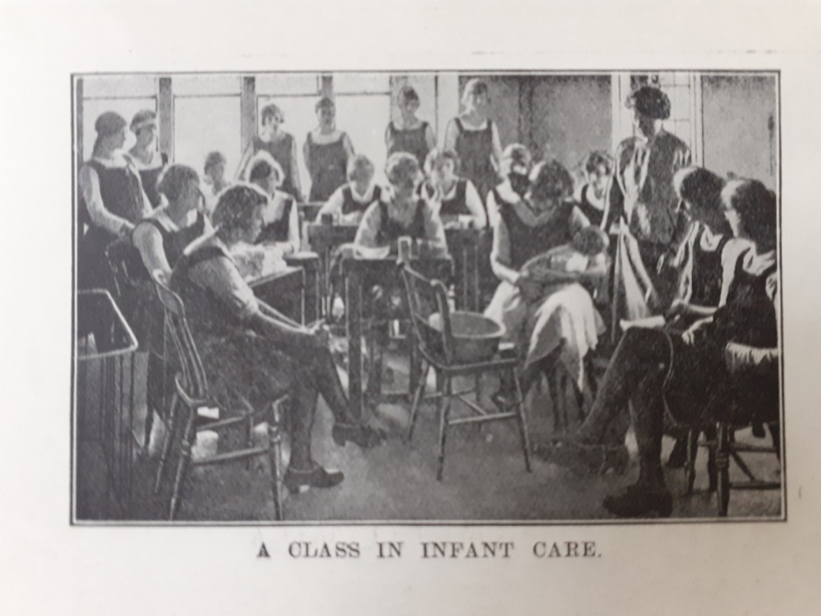
The Fisher Education Act of 1918 marked a significant reform in British education. School leaving age increased to 14 and those aged 14 – 18 could receive part-time education while working.
All girls who entered employment at Bournville Works received lessons in English, arithmetic, needlework, art, dressmaking, physiology, cookery, laundry work, laws of health, sick nursing, and ‘housewifery in cottage’. Housewifery and childcare were important subjects aimed to reduce the high infant mortality rate and improve the health of babies and their mothers.
In 1927 a purpose-built Infant Centre opened on Charlotte Road, Stirchley and was equipped by the Trident Trust (later W.A Cadbury Trust). During the opening Mrs Emmeline Cadbury said, “We know of no better way in which we could invest our money.”
Nora Yoxall and Elsie Whitford
Nora and Elsie were stained glass artists who influenced a wide range of architecture and decorative arts. They trained in both design and making at Birmingham School of Art, the first public art school in the country. The school was supportive of women working as artists and designers.
The first piece that Nora and Elsie collaborated on was the sanctuary of St Peter’s, Grove Lane, Handsworth in 1927. It included a painted roof, two stained glass windows, and painted reredos (ornamental screen covering). After this early commission they focussed on stained glass and worked together for the rest of their lives.
In 1953 they were commissioned to make a memorial window for St Francis of Assisi Bournville’s parish church. The window is in memory of Lt. Christopher Barclay RN, who died while on duty in 1953, aged 24. It was commissioned by Christopher’s mother and step-father Rev. Robnett Walters, who was the vicar of Bournville 1948 – 1952.
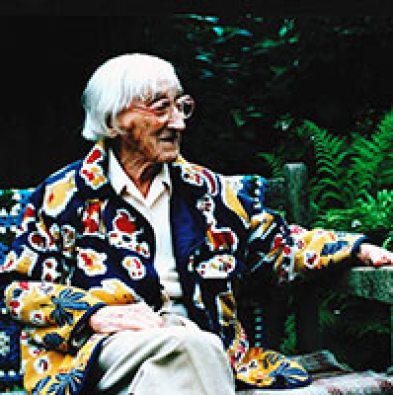
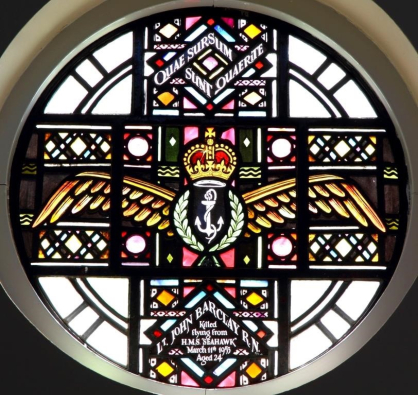
[Image 1: Nora Yoxall c/o Bournville society and St Francis archive. Image 2: Memorial window at St Francis]
Nora’s best-known piece is a second world war memorial showing ‘Civilian Acts of Mercy’. Formerly in the transept of Muswell Hill Methodist Church, it is now on display at Birmingham Museum and Art Gallery.
Nora died in 1998 at the age of 105, making her one of Bournville’s oldest residents.
Dorothy Cadbury
1892 - 1987
Born into the Cadbury family in 1892, Dorothy took employment in the factory after a girl from the Adult School for Girls said to her, ‘You preach to us and yet you know nothing about our life and work.’ Despite being given no special privileges while working, Dorothy later said, ‘I think that that year was the happiest of my life.' And in 1919 Dorothy was appointed as one of the Managing Directors of Cadbury Bros.
She was particularly involved in women’s work in Bournville; and was there at the conception of the Bournville Women’s Works Council, later becoming Managing Chairperson.
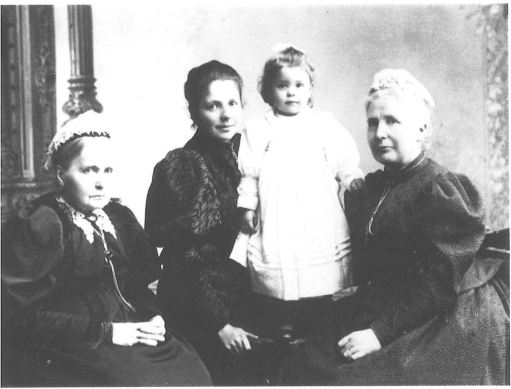
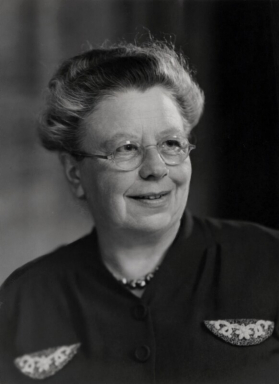
[Dorothy with her mother Geraldine, maternal aunt, and maternal grandmother]
Since 2020 Cadbury’s Roses have carried a story of their origin on the packaging, suggesting they were named after the favourite flowers of Dorothy. However, it is more likely that they were named after the packaging equipment company Rose Brothers who manufactured and supplied the machines that wrapped the chocolates.
Following her retirement, Dorothy, who had a great interest in botany, became an expert on pondweeds. She was involved with several societies, including a project which identified and recorded the flora of Warwickshire. She became the main author of 'A Computer Mapped Flora’ and brought together a collection of 400 pondweeds from around Britain for The British Museum. The rare hybrid Potamogeton x. cadburyae is named after her.
Dora Partridge
Dora Lilian Partridge was born in 1891 in Birmingham and dedicated her life to teaching. She received scholarships to the University of Birmingham and after completing her studies there went on to train as a teacher.
She began her work at the Day Continuation school in Stirchley (now Stirchley community church) in 193.
These were education sites specifically for school leavers and adults however were not popular with the public and the city council closed them in 1921.
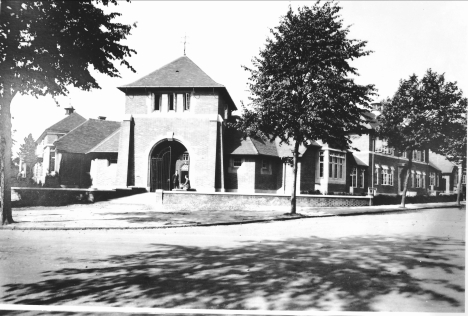
Despite other closing around the city, the Cadbury Family kept theirs open, even building a specialist, purpose built building to house both the boys and girls day continuation schools on Bournville village green. The building opened in 1925 and Dora Partridge became its first senior mistress, and the school went on to be very successful, even the longest running day continuation school int eh country.
Until they were 18, it was compulsory for workers at the Cadbury factory to attend the day continuation school, however, importantly they could go instead of a day’s work without losing any pay.
Dora was involved in all aspects of the school and was much loved by both staff and students. She taught maths, dress making, mother craft, and child training. She affected much change in the school and was a pioneer for education. She was on the staff of the school from its inception and wrote about its successes and challenges, delivering talks across the country.
In a eulogy, written for Dora by one of her colleagues it described her as a “pioneer in a branch of education, which parliament has now recognised as an essential part of our national education scheme by making provisions in the Act of 1944 for the establishment of county colleges based largely upon the experiment and experience of Miss Partridge and her colleagues in the Bournville Day Continuation School.”
Lily Waldron
This dress was made by Lily Waldron (nee Morris) for her wedding to Cromwell Waldron, at St Francis Church, Bournville on 24th April 1948.
Lily was a student at Ruskin Hall, which was then known as Bournville School of Art. It opened in 1903 for the study of fine art and craft, such as weaving, sewing, and leatherwork.
The dress was designed under the tutorship of Marjorie Watts and Miss Hedley. The veil was made by Lily from three tiers of cotton tulle – a very scarce material during and after the Second World War (clothing rationing 1941 – 49).
Phylis Setterford
Phylis lived at Selly Manor from 1561 – 1608 after marrying her second husband John Setterford. Her maiden name appears to have been Hollyes/Hollies. John died in 1587, but she lived at Selly Manor for the remainder of her life. She had two children and is thought to have lived until her 90s.
Selly Manor, then known as Smythe’s Tenement, was a farmhouse that existed on a wider estate which had a manor of Selly. The house has had hundreds of inhabitants over its long history, but as with many ‘ordinary people’, especially women, there is very little record of them. In the Tudor period the only women that were usually recorded in any kind of detail were royalty and nobility. However, we have quite a unique insight into the life of Phylis because of the inventory after her death. It shows a rare insight into the exact belongings of a women of modest status in the 16th century. As well as bequeathing money and goods to her children Elenor and William, she also left her cattle and remaining goods to her grandson John.
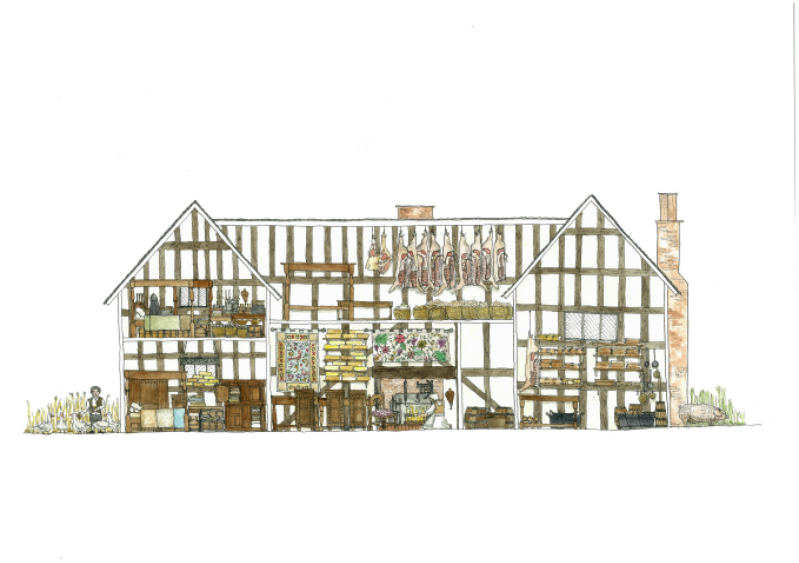
[Artist illustration of Phyllis's house interior based on her inventory 1608]
One interesting thing we know about Phyllis is that she was accused of breaking into a property in Harborne with her son William! We do not know the details of this, but nothing ever came of the accusation.
Phylis was buried in the Chancel of St Laurence Church in Northfield on the 29th June 1608.